

3 questions to Jean-François Gestin (CRCI2NA laboratory in Nantes, France), chair of the NOAR (Network Optimized Astatine labeled Radiopharmaceuticals) COST Action funded by the European Union.
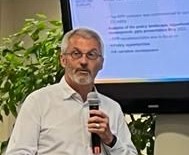

The members of COST NOAR met in Coïmbra at the beginning of May 2023. What was the ambition of this meeting?
The aim of the meeting, attended by more than 100 people, was to review the results achieved by the NOAR action after two and a half years, in relation to the objectives we had set ourselves in the autumn of 2020: to create a network of European academic stakeholders involved in the research and development of 211 astatine for nuclear medicine; to develop links with industry; and to provide proof of concept of the use of 211 astatine in the clinic through the launch of a phase 1 trial. The first two objectives have already been achieved. The 3rd could also be achieved if Atonco, which has just announced in Coïmbra that it will launch a phase 1 clinical trial in early 2024, succeeds.
A global network called WAC (World Astatine Community) has recently been set up. What is it all about?
The WAC was officially launched at the end of February 2023 at the 12th International Symposium on Targeted Alpha Therapy (TAT 12) in Cape Town, South Africa. It results from a wish on the part of COST members to extend the community on a global scale. The Department Of Energy (DOE) in the United States, the Japanese Atomic Energy Commission (JAEC) in Japan and our colleagues in South Africa have joined us. The aim of this extended network is to promote access to knowledge and expertise about astatine 211 on a global scale. In the long term, i.e. after the end of COST NOAR, it could take over from it. This is even desirable, as the community around astatine 211 is expanding rapidly, with a growing number of researchers and industrialists interested in every link in the chain leading to the use of astatine 211 in nuclear medicine, from production to clinical trials. We have also managed to interest the IAEA (International Atomic Energy Agency), NMEU (Nuclear Medicine Europe) and the European PRISMAP network. The WAC model has yet to be defined. The US DOE has its own funding, as does Japan’s JAEC. Both would agree to be grouped together under a common entity led by a European stakeholder, which would make it possible to finance joint actions. However, the question of funding for the European part of the network has not yet been resolved.
What are the next steps?
We will continue to work to develop astatine therapy in Europe and worldwide, through COST NOAR until 31 October 2024 and, I hope, beyond. To date, the NOAR network has more than 130 members from 22 countries and no fewer than 14 manufacturers (eleven of whom were present at the Coïmbra meeting). The current enthusiasm for astatine 211 is a reality. The European network is now well identified. Our partners see that academic stakeholders will soon be able to solve the problems of logistics and production of astatine for nuclear medicine. The next step is to set up the first integrated astatine therapy centre, ideally in Europe, to show that it works. The next step is to support the establishment of a network of “astatine nodes”, combining in the same area a cyclotron to produce astatine 211, a radiopharmacy centre, a clinical centre for injecting the radiopharmaceutical into patients, appropriate waste treatment facilities and, in the best case, an imaging centre. All of this within a geographical area compatible with the half-life of At and enabling this therapeutic modality to be offered to a sizeable population. To satisfy our clinical ambitions in Europe, we would need six. The Jüllich project in Germany is very interesting and will soon be up and running. There’s also Polatom in Poland, Arronax in France, the facilities in Copenhagen and perhaps one day a node in Coïmbra. Ideally, there should be another node in the Balkans. The development of these facilities will require financial resources. The WAC will be there to support the sharing of experience, the transfer of skills and scientific leadership.
Contact : Jean-François Gestin